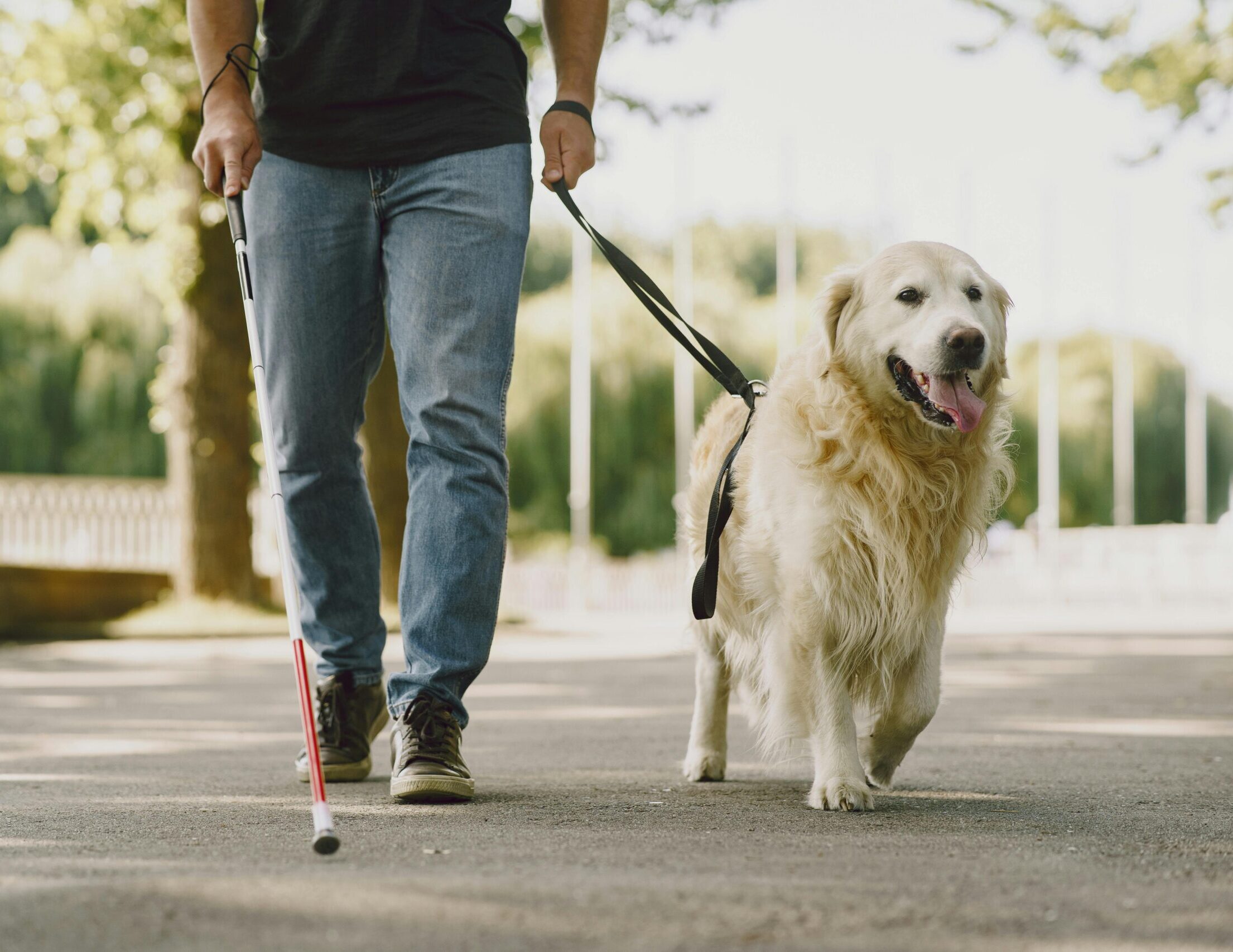
The Sign for Home: Key DeafBlind and Guide Dog Representation
Guide dog representation appears in fiction far less often than it should, and when it does, it is rarely within realistic portrayals of disabled life. The Sign for Home by Blair Fell stands apart, not only because it includes a guide dog, but because it tells a deeply human story about autonomy, access, and being DeafBlind in a world that wasn’t built for you.
More Than Guide Dog Representation
The Sign for Home follows a young DeafBlind man named Arlo Dilly, his guide dog, and his new tactile interpreter as Arlo enrolls in community college and begins asserting more control over his life. This book is one of the best examples of how fiction can offer a window into a life different from your own.
Though author Blair Fell isn’t Deaf or DeafBlind and doesn’t have a service dog, he brings extensive experience as a tactile interpreter within the DeafBlind community. That lived proximity shows on the page. Arlo is not a one-dimensional character, but a fully realized person navigating autonomy and relationships.
Arlo’s guide dog is a big part of his life, but this book is so good at portraying the multifaceted nature of life with a disability that guide dog representation is just a small piece of this book’s puzzle.
A Story About Access and Autonomy
The Sign for Home offers an in-depth portrayal of DeafBlind life. For readers interested in an extensive look at inclusion, this book is well worth the time. Fell directly confronts ableism and portrays many of the systemic barriers faced by DeafBlind, Deaf, and disabled people, exploring access problems, barriers to autonomy, and how disabled people experience (or are prevented from experiencing) the world.
Content note: Readers should be aware that the book addresses heavy themes, including sexual assault, religious manipulation, medical neglect, and other difficult topics.
The Sign for Home is not an easy read, but it is an important one. Not only is it intense, but it is also heartwarming and oftentimes funny.
Looking for other novels with great service dog representation? Check out this book review of Mary Robinette Kowal’s The Spare Man.