Book Review: Does Sarah Adams’ The Match Get Service Dogs Right?
It can be hard to find novels that include service dogs, let alone ones that represent them accurately. It’s even harder to find a romance novel with service dogs that gets the details right without turning the handler’s disability into a tragedy or over-the-top inspiration.
Enter: The Match by Sarah Adams.
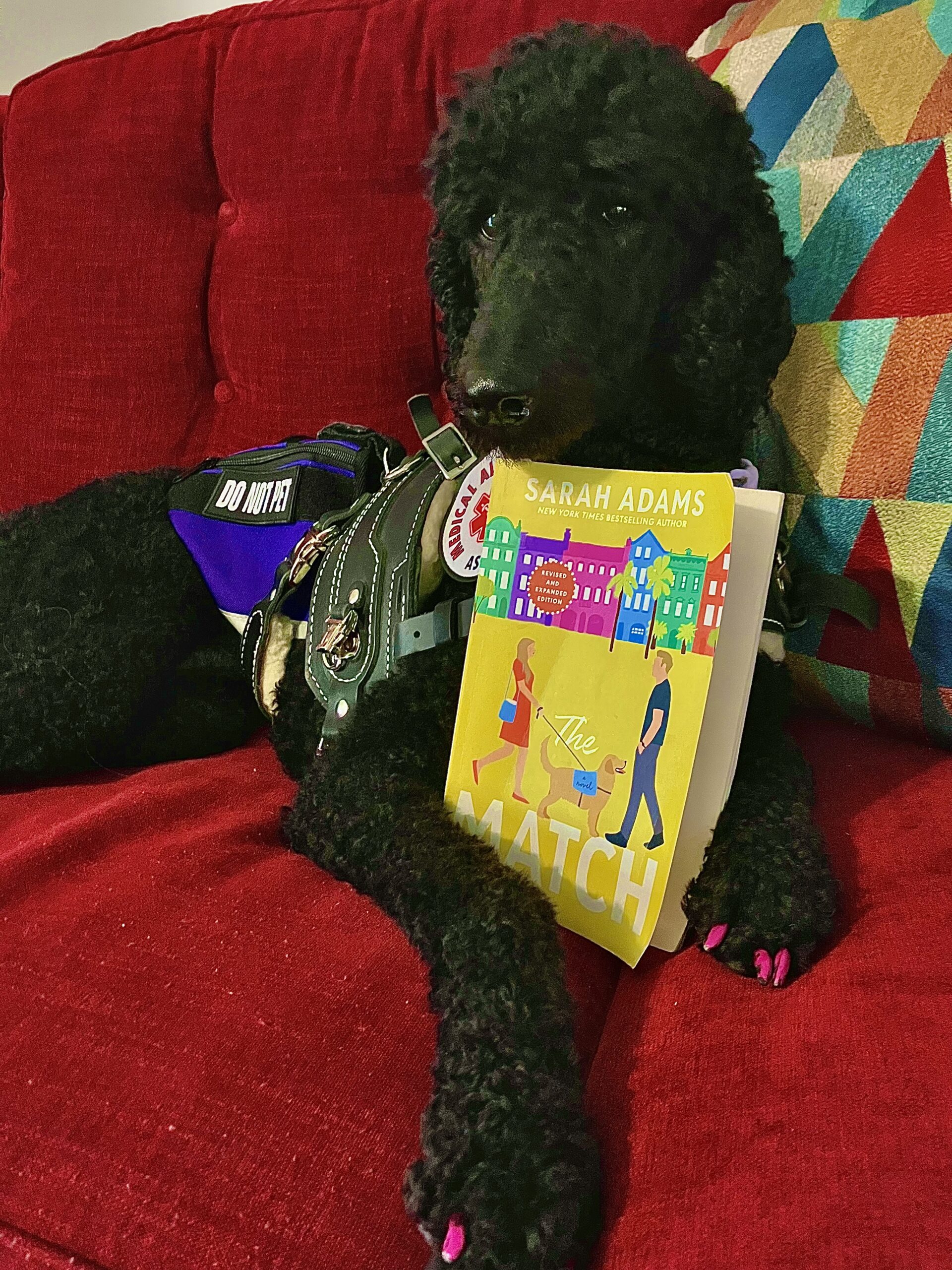
The Match is a sweet contemporary romance that follows Evie, a woman with epilepsy who has a service dog, and who also trains service dogs for a living. When she meets single dad Jake and his young daughter, Sam, who also has epilepsy, their lives begin to intertwine. As they bond over Sam’s condition and navigate their growing connection, the story highlights not one, but two service dogs who play meaningful roles in the characters’ lives.
It’s a comforting, feel-good romance that’s safe to recommend to your mom. But this isn’t a review of the love story or the plot. This is a review of how well the book represents service dogs and the realities of living with one.
1. The Story Normalizes Disabilities—and Service Dogs—Without Making Them Tragic
Evie is competent and confident, not in spite of her disability, but alongside it. It isn’t sad that she needs a service dog, and the book doesn’t treat her epilepsy as something to pity. Her service dog, Charlie, is an essential part of her everyday life, and the story makes that clear.
Evie’s epilepsy does affect her life (though much like the love scenes, her seizures happen off-page), but what stands out is how much Charlie empowers Evie to live independently. The representation is refreshingly affirming, showing a woman who lives with a disability and thrives.
2. The Book Shows What It’s Like to Have a Service Dog with You All Day, Every Day
Charlie goes everywhere with Evie, whether she’s working, socializing, or navigating first dates. Just like a real service dog, he’s always by her side. The book does a great job of including him naturally in her routine. He isn’t just mentioned once and forgotten; his presence is a consistent part of the story, normalizing the presence of service dogs in public spaces.
3. The Author Did Her Homework, Kind Of
It’s clear that Adams consulted service dog trainers while writing this book, because the foundational facts are solid. She never mislabels the dogs; there’s no confusion between therapy dogs, emotional support animals, or service dogs. Adams consistently portrays Charlie as a task-trained medical alert dog. He behaves like a real service dog should: always calmly by Evie’s side in public.
However, it doesn’t seem like Adams spoke with many (or any) service dog handlers. The difference is subtle, but noticeable to those with lived experience.
- Evie is often rushing out the door late, but there’s no mention of getting Charlie ready—no vest, no potty breaks. Anyone with a service dog knows that they are part of your “getting ready” routine. These details wouldn’t stand out much, if the book didn’t go out of its way to mention Evie’s own bathroom breaks and outfit changes. Because those small personal details are there for Evie, the absence of similar moments for Charlie feels like a missed beat.
- Evie constantly jumps into Ubers without a second thought, but anyone with a service dog knows that access can be a major issue with rideshares. Many Uber drivers deny rides when they see a service dog, or argue about letting a dog in their car. Handlers are always prepared for a possible confrontation or a canceled ride, not breezing in and out like it’s no big deal.
- When they’re at someone’s house for the first time, Charlie just kind of fades into the background and disappears. But for handlers, when you’re in a new environment and your service dog isn’t leashed or actively placed, that’s a situation you’re managing the entire time. The book doesn’t always show where Charlie is or how Evie is handling him in these situations, which pulled me out of the story a little.
However, these are small details that most readers wouldn’t notice. They didn’t break the story for me, and they don’t take away from the fact that the service dog portrayal is overall thoughtful and respectful.
Looking for a Good Romance Novel with Service Dogs? Look no Further ThanThe Match
While The Match doesn’t capture every small detail of life with a service dog, it gets the big things right. Evie’s story offers respectful, empowering representation of both disability and service dogs, without turning either into something tragic or overly inspirational. In The Match, Adams depicts a disabled woman who is thriving with her dog’s support.
For handlers and dog lovers alike, this is a cozy, feel-good read that proves disability and romance are not mutually exclusive (and that dogs belong in every kind of story).
Looking for other fun novels featuring service dogs? Check out this book review of Mary Robinette Kowal’s The Spare Man.